Pimple Marks Removal: What Fades Them Faster

Pimple marks are the flat brown or dark patches a spot leaves behind once it has healed. They are not scars, because the skin’s surface stays smooth, but in Indian skin they can last for months and often feel more stubborn than the acne that caused them. The good news is that they do fade, and the right steps can help that happen sooner.
This guide covers why acne marks linger, how long they usually take, the home care with evidence behind it, the remedies that make things worse, and when pimple marks removal at a clinic, with a light peel course or laser toning, is worth considering.
Why pimple marks linger in Indian skin
A pimple is a small patch of inflammation, and inflammation prompts the pigment cells around it to make extra melanin. When the spot heals, that pigment stays behind as a mark. DermNet notes that this post-inflammatory hyperpigmentation can happen to anyone but is more common in darker skin, where the colour tends to be more intense and to last longer.
Sun exposure darkens marks, which matters in a city as sunny as Lucknow. And anything that adds injury, such as picking, squeezing or harsh products, gives the pigment cells another reason to react. The American Academy of Dermatology notes that a product that irritates your skin can cause dark spots on its own.
How long acne marks take to fade
The first step is to stop new marks forming, which means getting the acne itself under control. The AAD explains that once breakouts stop, most dark spots fade on their own over time, although it can take a while. Our article on why acne is not going away explains what to look at first.
Once the cause has stopped, the AAD says a mark a few shades darker than your skin usually fades within six to twelve months. Marks that sit deeper in the skin, which often look slate blue or grey rather than brown, can take years. Treatment can speed up fading, and it works best on marks near the surface.
Pimple marks removal at home: what helps
Start with sunscreen. The AAD recommends a broad-spectrum, water-resistant sunscreen with SPF 30 or higher, ideally tinted with iron oxide to protect against visible light, and a non-comedogenic formula if your skin is oily. Reapply every two hours outdoors and after sweating.
Then add one product that fades marks. The AAD lists azelaic acid, glycolic acid, kojic acid, retinoids such as retinol, and vitamin C, and DermNet adds niacinamide among other options.
- Azelaic acid suits acne-prone skin. DermNet describes it as treating acne while reducing pigmentation, which helps when spots leave persistent brown marks in darker skin, and it does not make skin sensitive to the sun.
- Retinoids help with both breakouts and marks but can irritate at first, so start slowly. Stronger retinoids are something a doctor may prescribe.
- Vitamin C or niacinamide can sit in a morning routine under sunscreen if azelaic acid or a retinoid does not suit you.
Use one new product at a time, give it a few months, and stop if it burns or stings, as the AAD advises. Irritation can create new marks while you are trying to fade old ones.
Home remedies that can make marks worse
Several popular remedies do more harm than good on darker skin.
- Lemon juice is strongly acidic and baking soda strongly alkaline. Both can irritate, and irritation is one of the things that triggers dark marks.
- Scrubs and rough exfoliation injure the skin’s surface. DermNet notes that even clinic treatments can aggravate this kind of pigmentation if they injure the skin.
- Unlabelled fairness or bleaching creams are the riskiest of all. The AAD warns that some imported products have been found to contain steroids or mercury not listed on the label, and steroids used for a long time can leave skin thin, fragile or permanently discoloured. Never put liquid bleach on skin.
MARKS THAT WILL NOT SHIFTSend us a note about how long your marks have been there and what you have tried. We will explain how the doctor assesses them at Amber.

When a light peel course or laser toning helps
If marks remain after the acne has settled and a few months of sunscreen and home care, clinic pimple marks removal can speed things up. Post-inflammatory marks are among the pigment problems that tend to respond fastest, unlike melasma, which can be managed but not cured.
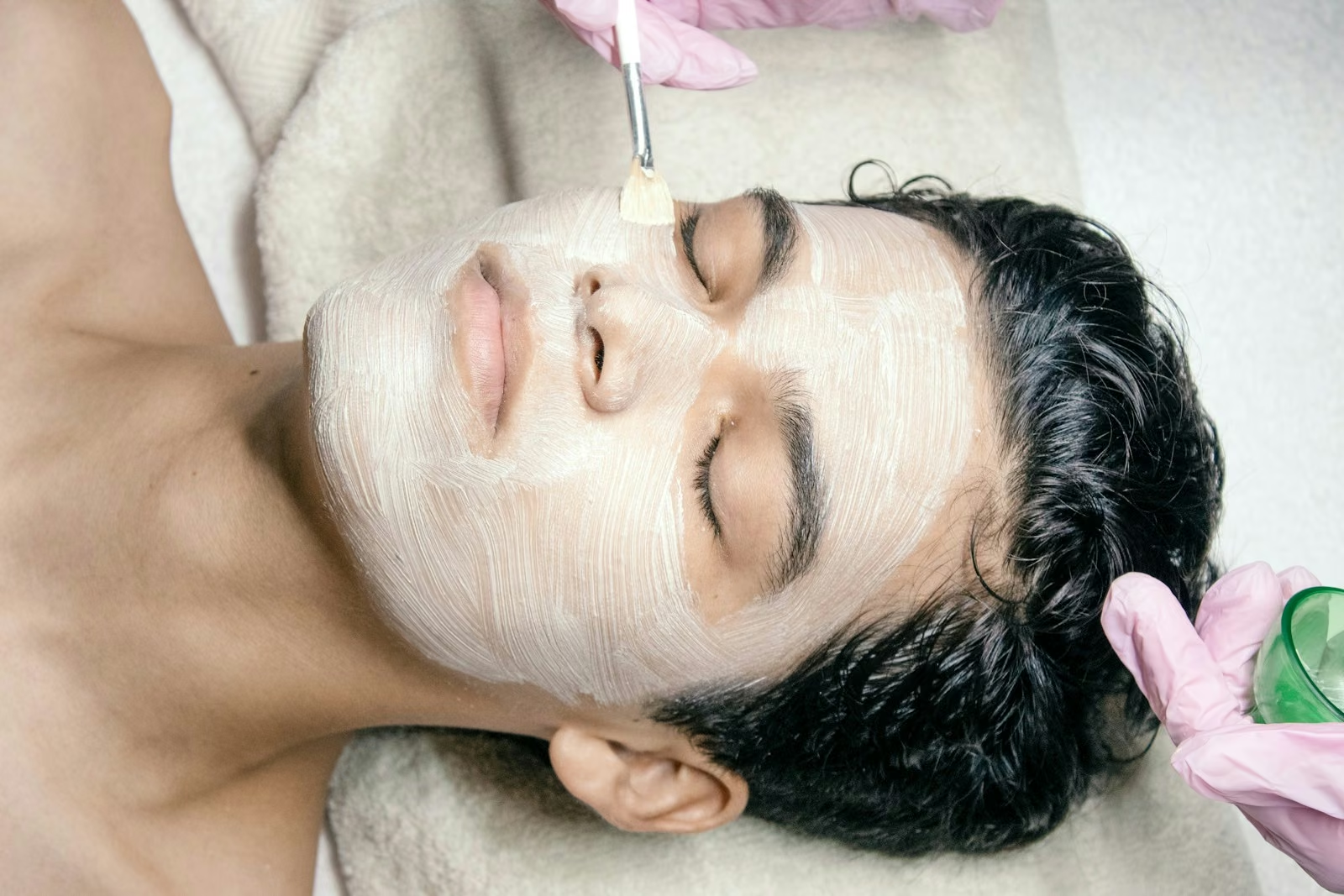
A course of light chemical peels is the usual starting point. At Amber, peel depth is chosen conservatively for Indian skin, using mesoestetic peels, because a course of lighter peels usually works better than one strong one. The AAD warns that people with darker skin can develop lasting pigment problems from peels done without experience of darker skin tones, which is why depth matters more than speed.
For stubborn marks, laser toning uses a low-fluence Q-switched Nd:YAG laser that targets pigment without peeling, usually as a course of six to ten sessions, two to four weeks apart. DermNet notes that peels and lasers help pigment near the surface but not pigment deep in the skin, so the doctor checks which kind you have first.
When to wait, or see a doctor first
- Acne that is painful, deep, spreading or leaving scars needs medical treatment first; marks will keep coming until it is controlled.
- Peels and laser toning wait while there is inflamed acne in the area, an infection or cold sore, or a fresh tan.
- If you take isotretinoin, tell the doctor: the NHS advises against chemical peels while you are on it.
- If you are pregnant or breastfeeding, tell the doctor before using a retinoid or starting any treatment; many cosmetic treatments wait until after.
- If you think a medicine is causing dark spots, do not stop it yourself; the AAD advises asking the doctor who prescribed it.
- A dark spot that was not left by a pimple, or one that changes, itches or bleeds, needs a doctor’s look rather than a fading cream.
Questions people ask about pimple marks
How long do pimple marks take to go away?
Once the acne behind them has settled, the AAD says marks a few shades darker than your skin usually fade within six to twelve months. Deeper marks, often slate blue or grey, can take years. Daily sunscreen and a fading product such as azelaic acid can shorten that.
What is the difference between acne marks and acne scars?
Marks are flat changes in colour that fade with time. Scars change the skin’s texture, leaving dips, pits or raised bumps, and do not fade on their own. They need different treatment, matched by the doctor to the scar type. The guide to chemical peels for acne scars explains what peels can and cannot do.
Does lemon juice remove pimple marks?
No. Lemon juice is acidic enough to irritate skin, and in darker skin irritation is one of the things that causes dark marks, so it can leave you with more of them. Daily sunscreen and a proven ingredient such as azelaic acid, glycolic acid or vitamin C are safer and more reliable choices.
How much does pimple marks removal cost in Lucknow?
Amber quotes after the doctor’s assessment rather than publishing a figure, because the plan depends on how many marks you have, how deep the pigment sits and whether acne is still active. The chemical peel cost article explains what shapes it. Message the clinic on WhatsApp to start.
Can I treat marks while I still get pimples?
Yes, at home. Sunscreen helps straight away, and azelaic acid works on acne and marks together. Clinic peels and laser toning are timed by the doctor, usually once inflamed spots have settled. Controlling the acne matters most, because each new pimple can leave another mark behind.
If marks are still with you after months of sunscreen and home care, see how the doctor plans chemical peels at Amber in Gomti Nagar, or read about laser toning for stubborn pigment. To ask about your own marks, message the clinic on WhatsApp.
Sources
- How to fade dark spots in darker skin tones, American Academy of Dermatology
- Postinflammatory hyperpigmentation, DermNet
- Azelaic acid, DermNet
- Chemical peels: FAQs, American Academy of Dermatology
- Isotretinoin: a medicine for severe acne, NHS
Considering this for yourself?
The honest answer for your skin comes from an assessment, not an article. Explore the treatment, or reserve an unhurried consultation with the doctor.