Chemical Peel at Home vs in Clinic: Safety and Results
A chemical peel at home looks like an easy shortcut: the bottles are simple to buy, and a clinic visit can feel like a big step. But the difference between the two is not only strength. It is who chooses the depth, how long the acid stays on, when it is stopped, and who notices if your skin reacts.
This article compares home products with clinic peels honestly, explains the risks of strong peels sold online, covers why Indian skin needs extra care, and sets out when any peel should wait.
What a chemical peel actually does
DermNet describes a chemical peel as a chemical applied to the skin to remove damaged surface cells, leaving fresher skin with a more even texture and colour. Peels are used for sun damage, uneven pigment, fine lines and acne, and their effect depends on depth.
- Superficial peels, often glycolic or salicylic acid, work on the outer layer and are usually well tolerated.
- Medium peels reach deeper and leave skin red, swollen and crusted for about a week.
- Deep peels are now rarely used on the face because of the risk of scarring and toxicity.
What a chemical peel at home can and cannot do
Products sold for home use, such as peel pads and wash-off peels, tend to be gentler, with lower concentrations of acids like glycolic, lactic or salicylic acid. The Cleveland Clinic notes that most are light peels for mild texture problems and minor pigmentation, and that they may need several applications to show results.
Used patiently and exactly as directed, a mild product can be a sensible part of a routine. It is not designed for stubborn pigment, melasma or acne scars, and leaving it on longer or applying it more often only raises the risk of irritation. If you try one, the Cleveland Clinic suggests:
- testing a small area first, such as the jawline or behind the ear, and waiting a day to see how your skin reacts;
- avoiding sun and tanning for about two weeks beforehand;
- taking extra care if you use retinoid creams such as retinol or tretinoin, which thin the top layer so a peel goes deeper;
- following the timing on the label exactly, and rinsing or neutralising the product as instructed.
The real risk: strong peels bought online
The US Food and Drug Administration (FDA) has warned consumers not to buy or use certain chemical peel products without professional supervision. Products sold online and in beauty shops contained acids such as trichloroacetic, glycolic, salicylic and lactic acid at strengths the FDA described as too high to use safely at home.
The FDA explains that the concentration, the number of applications and the time a peel stays on all decide how deep it goes. Too deep, and the result can be a chemical burn, with pain, swelling, infection, changes in skin colour and scars that may be disfiguring. The FDA also points out that it has not approved any chemical peel product.
Darker skin carries extra risk. DermNet explains that dark marks after a skin injury, known as post-inflammatory hyperpigmentation, are more common in darker skin, tend to be more intense and last longer, and darken further in the sun. A more severe injury can leave pale patches instead, which are usually permanent.
HOME OR CLINICTell us what you are hoping to treat and what you have used so far. We will explain how the doctor assesses skin for a peel at Amber.
What a clinic peel adds
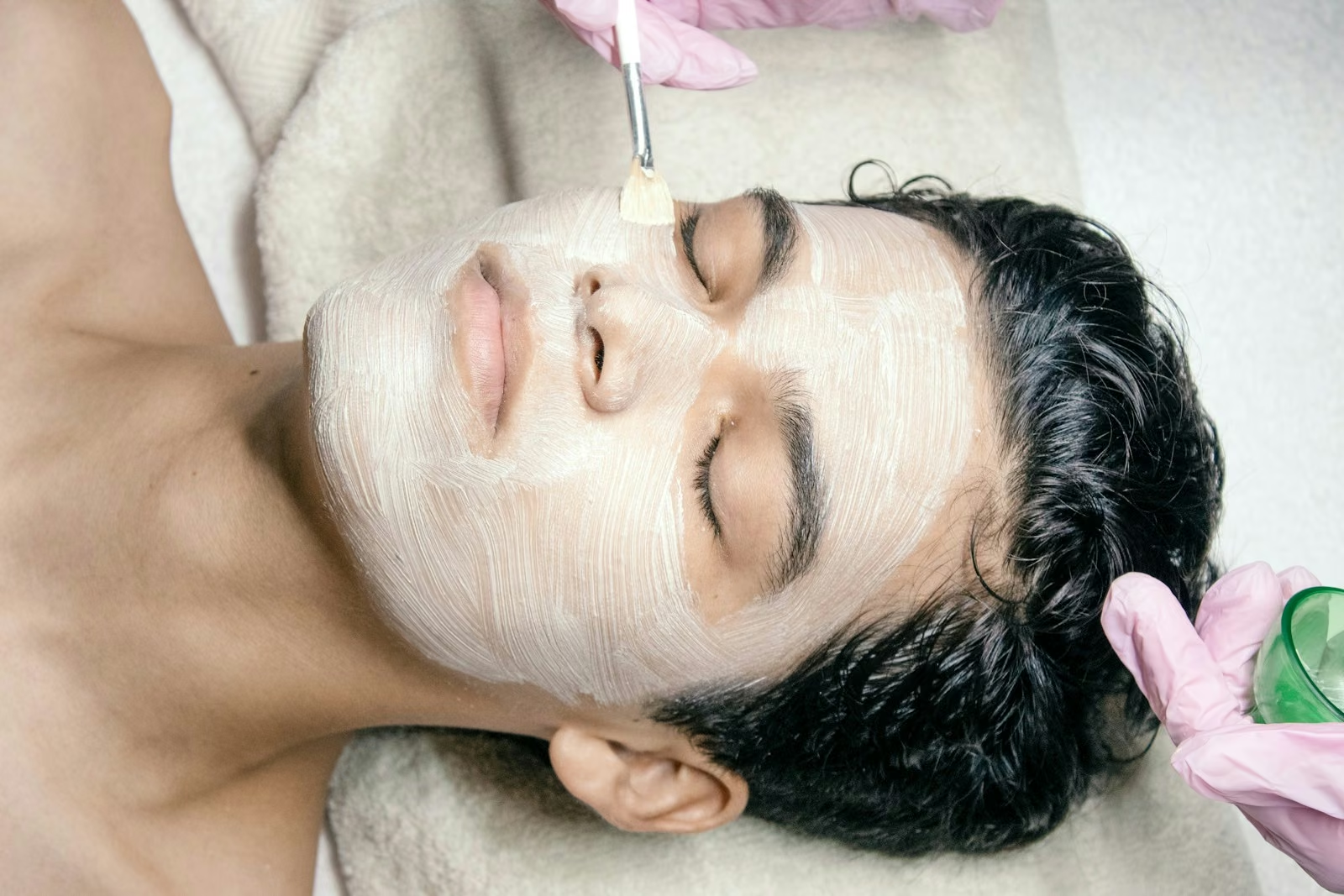
The American Academy of Dermatology (AAD) warns that the results of a chemical peel depend largely on the skill of the person performing it. Some people are given a preparation routine for a few weeks beforehand. On the day, the skin is cleansed, the peel is applied evenly, and the skin is watched so the peel can be removed or neutralised at the right moment. DermNet notes that complications are uncommon when the person performing the peel is properly trained and experienced.
Skin tone shapes the plan. DermNet explains that lighter peels are used on darker skin because of the risk of dark marks, and the AAD says people with darker skin can have peels safely with someone experienced in treating darker skin tones. At Amber, depth is chosen conservatively for Indian skin, and a course of lighter peels usually works better than one strong one. Amber uses mesoestetic peels, and Cosmelan for stubborn melasma, which includes a home phase; the guide to how the Cosmelan peel works explains that route.
Sun protection and aftercare, whichever route you choose
The AAD advises daily sunscreen once the skin heals, to keep results, along with no tanning and no scratching or picking at peeling skin, which raises the risk of infection and scarring. DermNet adds that treated skin should be kept cool, moisturised and protected from the sun, especially for the first six months.
After a light peel, expect redness and some flaking for a few days. If your skin burns, itches or swells, contact the doctor, as the AAD advises. In Lucknow’s strong sun, a broad-spectrum sunscreen is the step that protects everything else, and the chemical peel aftercare guide has more practical detail.
When to wait, or skip a peel for now
Hold off, and tell the doctor first, if any of these apply:
- sunburn, a fresh tan, broken skin, a rash or an active infection on the face;
- a history of cold sores, since the Cleveland Clinic notes a peel can trigger an outbreak;
- isotretinoin, now or recently, or regular retinoid creams;
- a history of keloids or raised scars, a risk DermNet says is higher in darker skin;
- pregnancy or breastfeeding, when many cosmetic treatments wait until after.
If you already have melasma or patchy pigmentation, a stronger bottle is the wrong answer. DermNet notes that blotchy pigmentation after a peel is more likely in darker skin and in people who had a pigment problem beforehand. Melasma is managed, not cured, and needs a doctor’s plan.
If a home peel leaves your skin blistered, raw, oozing or very painful, wash the product off and get medical help promptly. The FDA notes that injuries from strong peels may need emergency care.
Questions people ask about a chemical peel at home
Is a chemical peel at home safe?
A mild product sold for home use, tested on a small area first and used exactly as directed, can suit many people. Strong peels bought online are a different matter. The FDA has warned that some contain acids at strengths too high to use safely at home, with a risk of burns, scarring and lasting colour changes.
What is the difference between a home peel and a clinic peel?
Mainly control. Home products are usually lower in strength and need more applications. In a clinic, the person treating you chooses the depth for your skin, times the peel, removes or neutralises it at the right moment and plans the sessions. The AAD notes that results depend largely on that person’s skill.
Is a clinic peel safe for Indian skin?
It can be, with care. The AAD says people with darker skin can have peels safely with someone experienced in treating darker skin tones, and DermNet explains that lighter peels are preferred to limit the risk of dark marks. At Amber, depth is chosen conservatively, usually as a course of lighter peels.
How much does a chemical peel cost in Lucknow?
Amber quotes peels after the doctor’s assessment rather than publishing a figure, because the right peel, its depth and the number of sessions depend on your skin and concern. You see the written quote before anything is booked. The chemical peel cost article explains what shapes it. Message the clinic on WhatsApp to start.
How soon will I see results?
Usually not after one session. DermNet notes that the first light peel can be disappointing, with clearer improvement after repeated peels, and the Cleveland Clinic says home products may need several applications. The AAD adds that most results are not permanent, so daily sunscreen and gentle home care help them last.
If you are weighing up a peel, start with how the doctor plans chemical peels at Amber in Gomti Nagar, or message the clinic on WhatsApp to ask whether a peel suits your skin.
Sources
- Chemical peels: FAQs, American Academy of Dermatology
- Chemical peels (face peels), DermNet
- Postinflammatory hyperpigmentation, DermNet
- FDA warns against using chemical peel products without professional supervision, US Food and Drug Administration
- What to know about chemical peels at home, Cleveland Clinic
Considering this for yourself?
The honest answer for your skin comes from an assessment, not an article. Explore the treatment, or reserve an unhurried consultation with the doctor.