
Open Pores Treatment: What Helps and 5 Honest Answers

Open pores are a common worry, and a heavily oversold one. Much of the open pores treatment advice online promises to close or shrink them for good. Pores do not open and close like doors, and no cream, facial or laser makes them disappear. What you can change is how visible they look, and that is a realistic goal.
This article explains what pores are and why some look larger, what helps at home, which clinic treatments may make a difference, how the carbon laser peel fits in, and when it is better to wait.
What open pores are, and why they look larger
A pore is a small dip in the skin’s surface that holds the openings of the ducts carrying oil and sweat. DermNet lists the main reasons pores look bigger: more oil, larger hair follicles, products that clog the skin, loss of elasticity with age, and sun damage. Acne plays a part too. Blackheads sit inside pores and stretch them, and inflamed spots can weaken the opening over time.
Some of it is inherited. DermNet notes that people of Indian and African ancestry tend to have larger pores, that pores look larger with age, and that in women their size can vary through the menstrual cycle. Large pores on the nose and central cheeks are usually the most noticeable, because that is where oil glands are busiest. Steam does not open pores and cold water does not close them; both only change how the skin feels for a few minutes.
What helps at home
It helps to be honest about the goal. DermNet states plainly that treatments aimed at shrinking pores are not very effective. Good home care can still keep them clear and less noticeable.
- Wash gently, twice a day. The American Academy of Dermatology advises a gentle, non-abrasive, alcohol-free cleanser, lukewarm water and your fingertips, morning and night, and again after heavy sweating in Lucknow’s hot months. Scrubbing irritates the skin rather than cleaning pores more deeply.
- Salicylic acid. DermNet explains that it helps stop the cells inside follicles from clogging, and helps break down blackheads and whiteheads. It can sting a little at first.
- A retinoid at night. The AAD notes that retinoids help prevent clogged pores. Start with a gentle retinol on alternate nights, build up slowly and moisturise, because in brown skin irritation can leave dark marks.
- Non-comedogenic products. Heavy creams and make-up that clog the skin make pores look bigger.
- Daily sunscreen. Sun damage is one of the causes DermNet lists, so protection matters even if you are oily.
- Hands off. Squeezing inflames the skin and can leave marks that last longer than the blackhead.
Use one active at a time. DermNet advises against layering salicylic acid with other medicated products such as retinoids unless a doctor suggests it. For stubborn blackheads, see the guide to whiteheads and blackheads.
WONDERING WHAT WOULD HELPTell us where your pores bother you most and what you already use. We will explain how the doctor decides between home care, a peel or a laser session.
Clinic open pores treatment: what can help
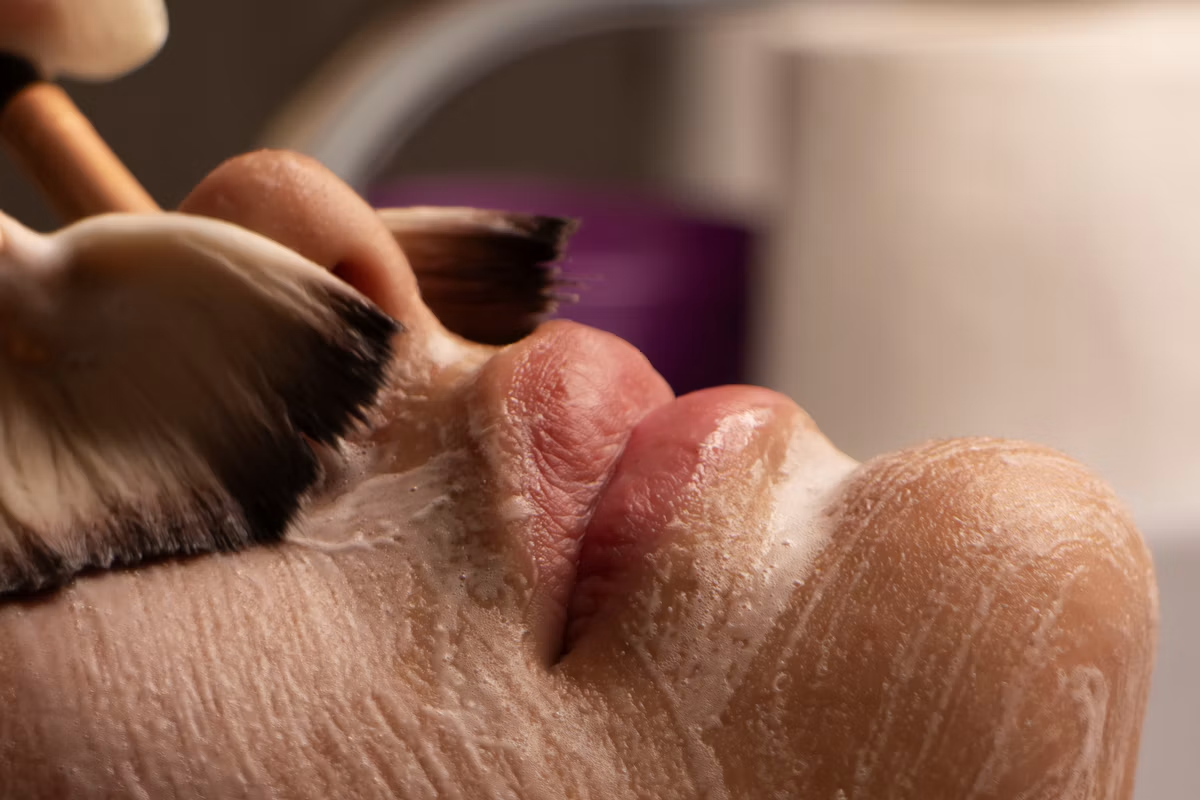
When home care has gone as far as it can, a clinic treatment may add a little more. DermNet lists chemical peels among the options, and notes that physical treatments aimed at the oil glands, such as laser treatment and radiofrequency microneedling, may help. The key word is may: results are modest and need maintaining.
At Amber, the doctor looks at what is driving your pores before suggesting anything:
- Oily, congested skin: a course of light chemical peels, with the depth chosen conservatively for Indian skin, or the carbon laser peel described below.
- Loose skin with age: where loss of firmness makes pores look stretched, RF microneedling may suit better, once any acne is quiet. The guide to how MNRF works explains the treatment.
- Active acne: the acne needs treating first, because inflamed spots are part of what enlarges pores.
How the carbon laser peel works
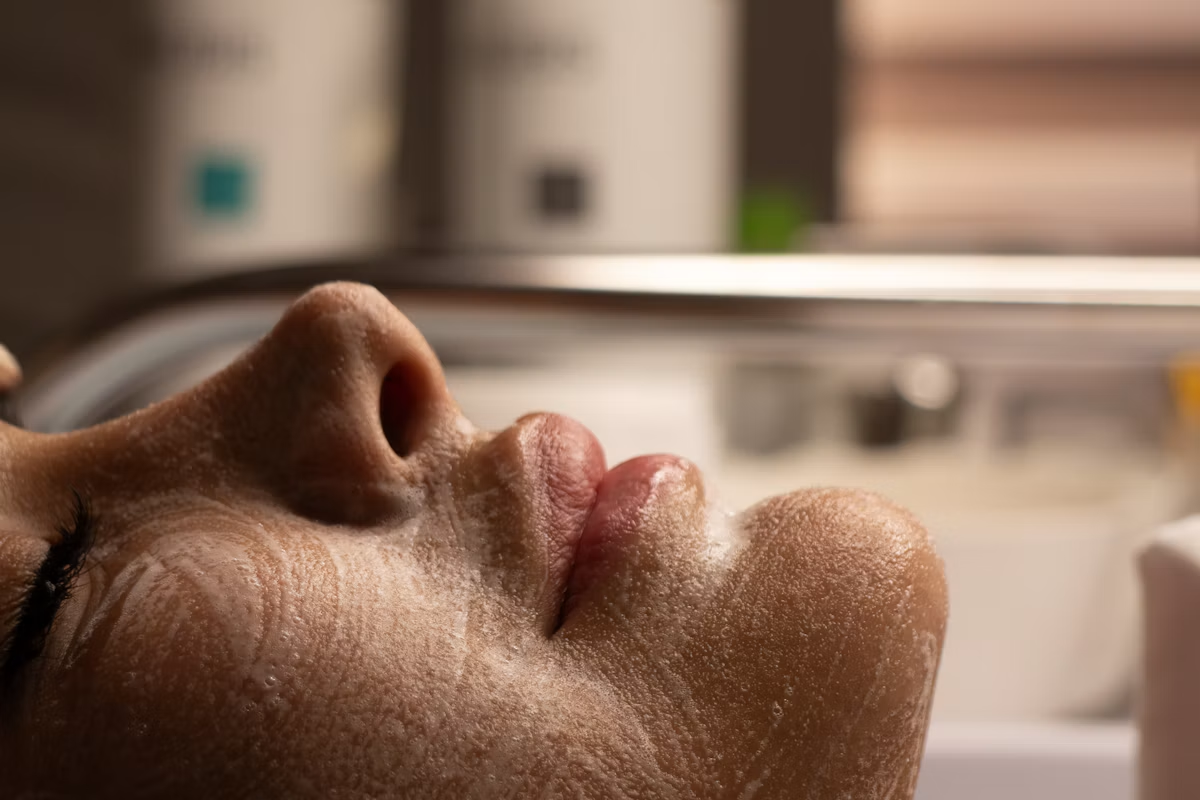
The carbon laser peel, often called the Hollywood facial (nothing to do with the dental “Hollywood smile”), is the treatment people most often ask about for oily skin and visible pores. At Amber it runs in four steps: the skin is cleansed, a thin layer of carbon is applied, a laser is passed over the face using the Lutronic Spectra XT, and the skin is calmed and protected before you leave.
It is chosen for brightness and for the look of pores, and there is minimal downtime, which is why it is a favourite before weddings and events. Be realistic about what it does. It can leave skin looking brighter and pores less noticeable for a while, but it does not change the pores you were born with, and the effect fades without good home care.
When to wait, and possible side effects
- Inflamed acne, an infection or a cold sore on the face: get it treated or settled first.
- A fresh tan or sunburn: let it calm down before any peel or laser.
- Pregnancy or breastfeeding: tell the doctor. The AAD advises against retinoids in pregnancy, DermNet asks you to tell your doctor before using salicylic acid, and many cosmetic treatments wait until afterwards.
- Acne medicines, especially tablets: tell the clinic, because some treatments need to wait.
Side effects are usually mild: redness, warmth, dryness or light flaking after a peel, and some stinging when a new active starts. The bigger risk for Indian skin is irritation turning into dark marks, which is why the AAD stresses starting slowly and why Amber keeps peel depth conservative. Sometimes the advice is to wait, or to do less.
Questions people ask about open pores treatment
Can open pores be closed permanently?
No. Pores are part of the skin’s structure, and their size is partly inherited. Treatment can make them less noticeable by clearing oil and debris and improving skin quality, but DermNet notes that treatments aimed at shrinking pores are not very effective. Results need maintaining, and nobody can promise a particular outcome.
Does ice or cold water shrink pores?
Not in any lasting way. Cold water or ice can make skin feel tighter for a few minutes, but it does not change the size of a pore, just as steam does not open one. Gentle cleansing, salicylic acid, a retinoid at night and daily sunscreen do far more over time.
Why are the pores on my nose so large?
The nose has some of the busiest oil glands on the face, so its pores fill with oil and dead skin cells and look stretched. Blackheads make them look larger still. DermNet notes that salicylic acid helps break down blackheads. Squeezing tends to inflame the skin, so leave stubborn blackheads to gentle, regular care.
How much does open pores treatment cost in Lucknow?
Amber quotes after the doctor’s assessment rather than publishing a figure, because the right route depends on what is driving your pores: oil, congestion, acne or loss of firmness. Light peels, the carbon laser peel and RF microneedling are planned differently. The carbon laser peel cost article explains more. Message the clinic on WhatsApp to start.
Is the carbon laser peel good for open pores?
It can help pores look less noticeable and skin look brighter, with minimal downtime, which is why many people choose it before an event. DermNet lists laser treatment among the options that may help enlarged pores. It does not change pore size for good, so keep up gentle cleansing, a retinoid and sunscreen afterwards.
If you would like to know what a clinic treatment could add to your home care, read how the doctor approaches the carbon laser peel at Amber in Gomti Nagar, where your skin is assessed before any open pores treatment is suggested. For a question about your own skin, message the clinic on WhatsApp.
Sources
- Enlarged pores, DermNet
- Salicylic acid, DermNet
- Face washing 101, American Academy of Dermatology
- Retinoid or retinol, American Academy of Dermatology
Considering this for yourself?
The honest answer for your skin comes from an assessment, not an article. Explore the treatment, or reserve an unhurried consultation with the doctor.