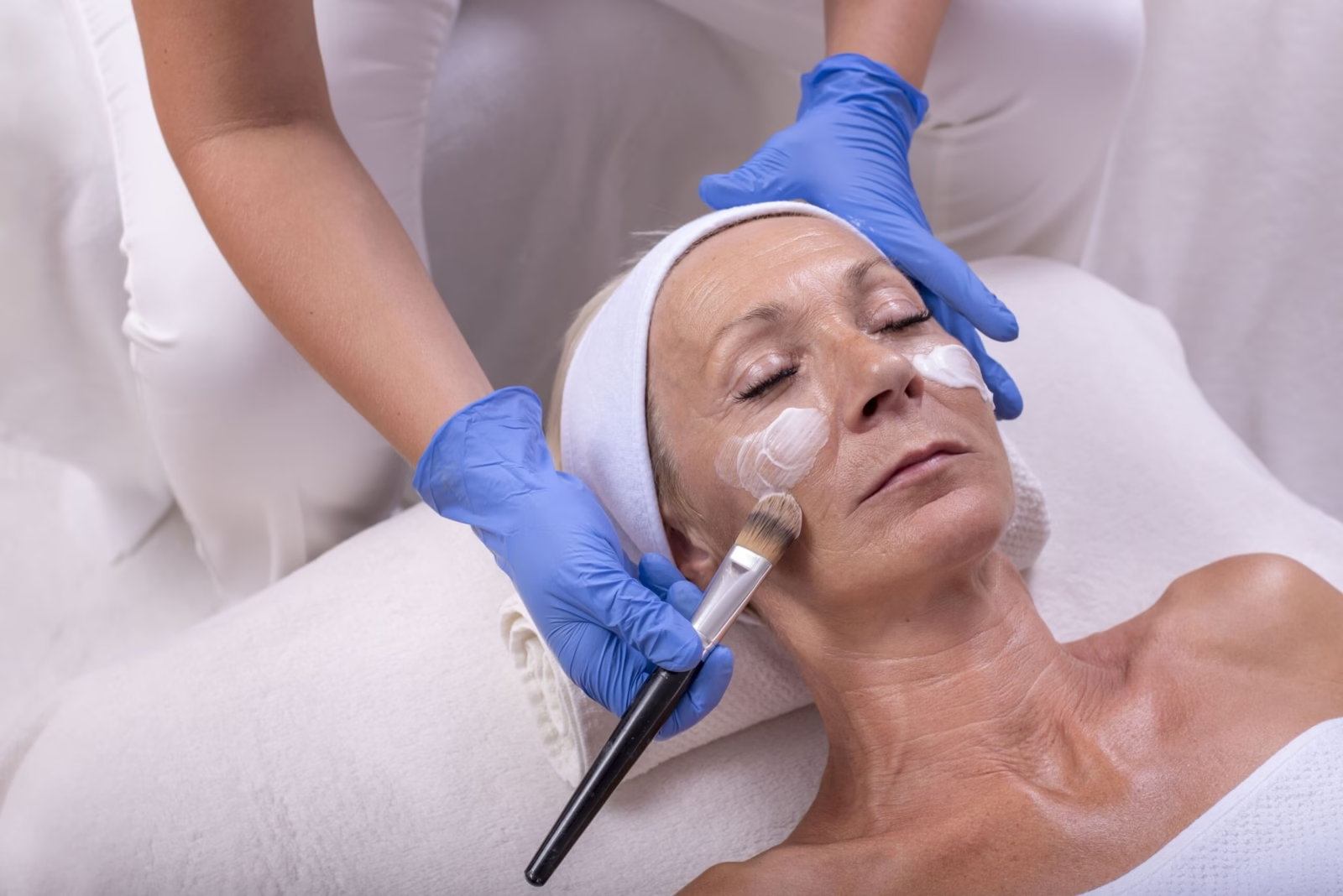
HIFU vs Thread Lift: How They Differ and Who Each Suits

If your jawline, mid-face or neck has started to soften, you have probably seen HIFU and thread lifts offered for the same job. The HIFU vs thread lift comparison is worth making carefully, because the two are not quite rivals. One uses focused ultrasound to make the skin’s own support tighten over months; the other places dissolvable threads under the skin to hold tissue in a new position. Before going further, a plain statement: Amber offers HIFU and does not offer thread lifts, so this comparison is written by a clinic that provides one of the two.
The aim here is not to talk you out of threads. It is to explain what each does, who each suits, what the honest limits are, and how to decide, so that whichever you choose, you choose it for the right reason.
What HIFU does
HIFU stands for high-intensity focused ultrasound. The device sends ultrasound energy to precise depths under the skin, creating small points of heat in the deeper support layer without breaking the surface. The body responds by producing new collagen around those points, and the skin tightens gradually as it does.
At Amber the platform is the Ultraformer III, which delivers both micro and macro focused ultrasound; the doctor chooses the depths for each area. It is used on the face, the jawline, the neck and the brow. Results build over weeks, typically reaching their fullest around three months after a session, and the clinic describes them as a lift in degrees, not a surgical result. This is the aesthetic HIFU for skin, not the HIFU used to treat the prostate.
What a thread lift does
A thread lift places fine threads, usually made of a dissolvable suture material with small cones or barbs along them, under the skin through a needle or cannula. The threads catch the tissue and are pulled to reposition it, giving an immediate change in the line of the jaw or the cheek. Over the following months the threads dissolve and the body lays down some collagen along their path.
The repositioning fades as the threads go, and the collagen effect is modest, so the result is generally described as lasting from several months to a year or two, depending on the thread material, before it is repeated. It is a minimally invasive procedure with entry points, some swelling and bruising, and a short recovery. Amber does not offer it; this description is of the procedure in general, not of any clinic’s version.
Where they actually differ
| Question | HIFU | Thread lift |
|---|---|---|
| Mechanism | Heat points stimulate new collagen | Threads reposition tissue mechanically |
| When you see it | Gradual, over about three months | Immediate, then softens as threads dissolve |
| Skin broken | No | Yes, entry points |
| Downtime | Minimal; some tenderness | Days of swelling or bruising |
| Best for | Early to moderate laxity, skin quality | Visible repositioning of specific areas |
| Offered at Amber | Yes | No |
The simplest way to hold the difference: HIFU improves the skin’s own support and asks you to wait for it; threads move tissue and show you straight away. Someone who wants a change visible at an event next month is not a HIFU patient for that event. Someone who wants no entry points, no bruising and a result that arrives quietly is not asking for threads.
Who each suits
HIFU suits people with early to moderate softening who are prepared to wait for the result and who want the skin itself to look firmer, not just repositioned. It is also the option for anyone who does not want anything placed under the skin. It does less for heavy laxity, and a clinic that promises a surgical jawline from ultrasound is promising the wrong thing.
A thread lift suits people with a specific area they want visibly moved, who accept a few days of recovery and a result that needs repeating. It is a procedure with more that can go wrong: visible or palpable threads, asymmetry, dimpling, infection at entry points. In good hands these are uncommon; they are still reasons to choose the practitioner carefully. If threads are the right procedure for what you want, the doctor will say so and will not offer HIFU for a job it is not designed to do.
How Amber prices HIFU, and how to get your number
Amber does not publish a price for HIFU. It is quoted by area, because the face, the jawline, the neck and the brow each take a different amount of time and energy, and because the doctor may recommend one area rather than three. Dr. Naznin Holia assesses your face, decides whether HIFU is the right tool at all, proposes the areas and the depths, and writes the quote down before anything is booked.
Sometimes the honest advice is to start with one area and review at three months; sometimes it is that HIFU will disappoint and a different route, at Amber or elsewhere, is the truthful recommendation. The HIFU treatment cost article explains the by-area quote in full.
YOUR NUMBERSend a daylight photo of your face from the front and the side, and tell us what you would like to change. We will say whether HIFU fits, which areas, and how it is quoted.
When to wait, and who neither suits
Neither is right for someone with heavy laxity and significant excess skin; that is a conversation with a surgeon, and a good aesthetic clinic will say so early. Pregnancy and breastfeeding are reasons to postpone both. Active skin infection, severe acne or open lesions in the area mean waiting. Very slim faces need care too, because HIFU can reduce fat as well as tighten, and the doctor may advise against it.
Anyone with a pacemaker or another implanted electronic device, or with metal implants such as plates or screws in the face or jaw, needs the doctor’s view before HIFU is planned. A history of keloid scarring or bleeding disorders matters more for threads, since the skin is entered. And anyone who has had fillers recently should tell the doctor, because the timing and the depths of HIFU are planned around them.
Timing matters, too. HIFU planned for a wedding should be done well ahead, because the result arrives over months; HIFU done a fortnight before the date will have barely begun to show. If the event is close, the honest answer may be a different treatment or none.
Questions people ask about HIFU vs thread lift
Which costs more, HIFU or a thread lift?
Amber cannot compare the two on price because it offers only HIFU, and it does not publish a figure for that: HIFU is quoted by area after the doctor has assessed your face. Message the clinic on WhatsApp with photos to get a written quote.
Does Amber offer thread lifts?
No. Amber offers HIFU and does not perform thread lifts. If a thread lift is the right procedure for what you want, the doctor will say so rather than offer HIFU as a substitute. This article describes threads in general terms, not any clinic’s version.
How long does HIFU last compared with threads?
HIFU results build over about three months and then fade gradually as the skin ages; how long yours holds depends on your skin, age and lifestyle. A thread lift shows immediately and softens as the threads dissolve, generally over several months to a year or two. Neither is permanent, and neither is a surgical result.
Is HIFU painful?
HIFU feels like bursts of heat and deep pressure. Many find it uncomfortable in places, particularly along the jaw and over bone, and some find those spots painful. There is no needle and the skin is not broken. Tenderness and mild swelling can follow for a few days; the doctor sets the energy and depths for your skin.
Can HIFU and a thread lift be combined?
Some clinics combine them, using threads for repositioning and HIFU for skin quality. Amber does not offer threads, so anyone considering both should have the two planned by practitioners who will talk to each other about sequence and timing. The doctor will tell you honestly whether HIFU alone is likely to give you what you want.
If you would like the doctor to assess your face before you decide, book a consultation for HIFU treatment at Amber in Gomti Nagar, or see how the clinic compares its anti-ageing routes. The HIFU cost article is the natural next read. For a written quote on the areas that suit you, message the clinic on WhatsApp.
Considering this for yourself?
The honest answer for your skin comes from an assessment, not an article. Explore the treatment, or reserve an unhurried consultation with the doctor.